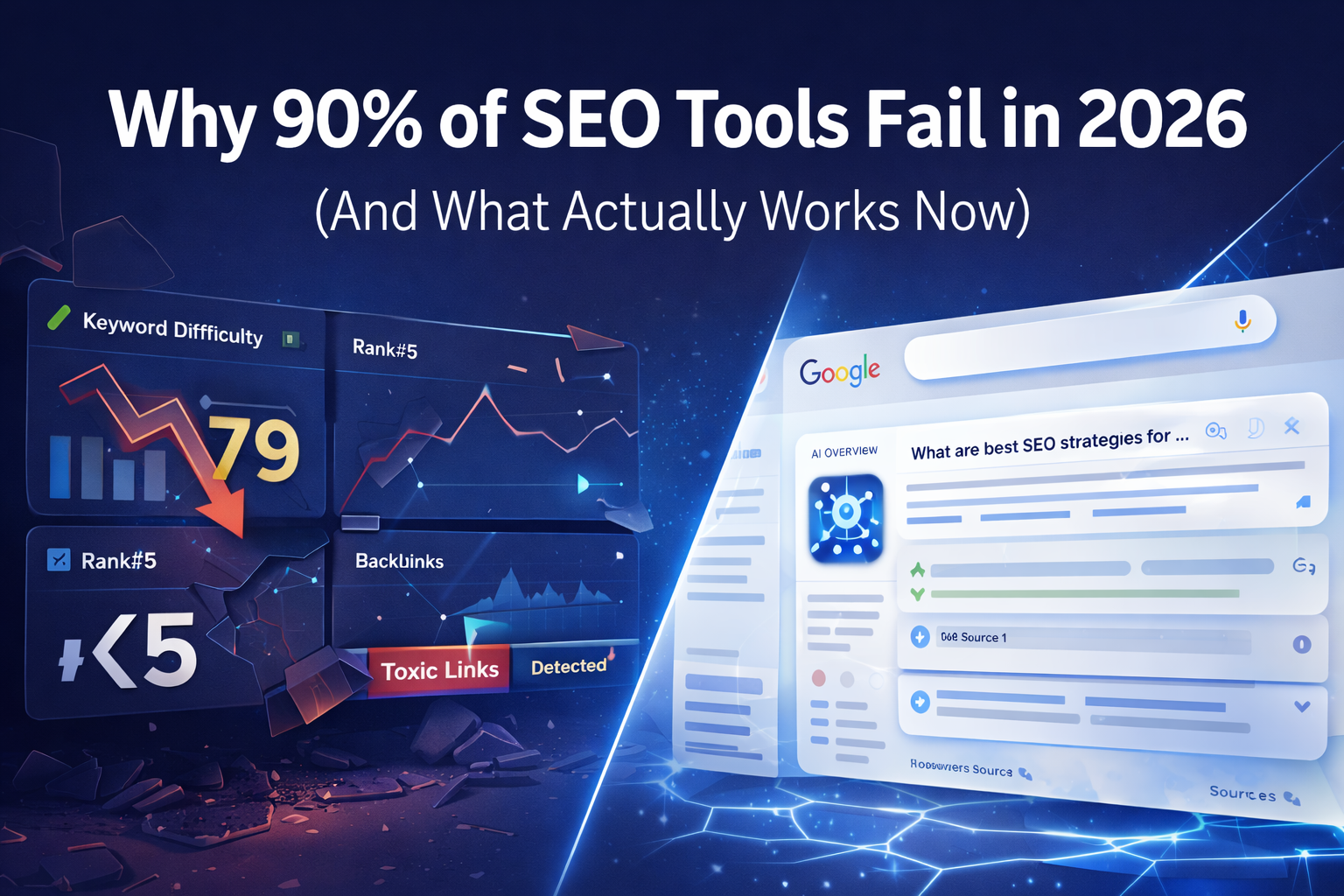
Why 90% of SEO Tools Fail in 2026 (And What Actually Works Now)
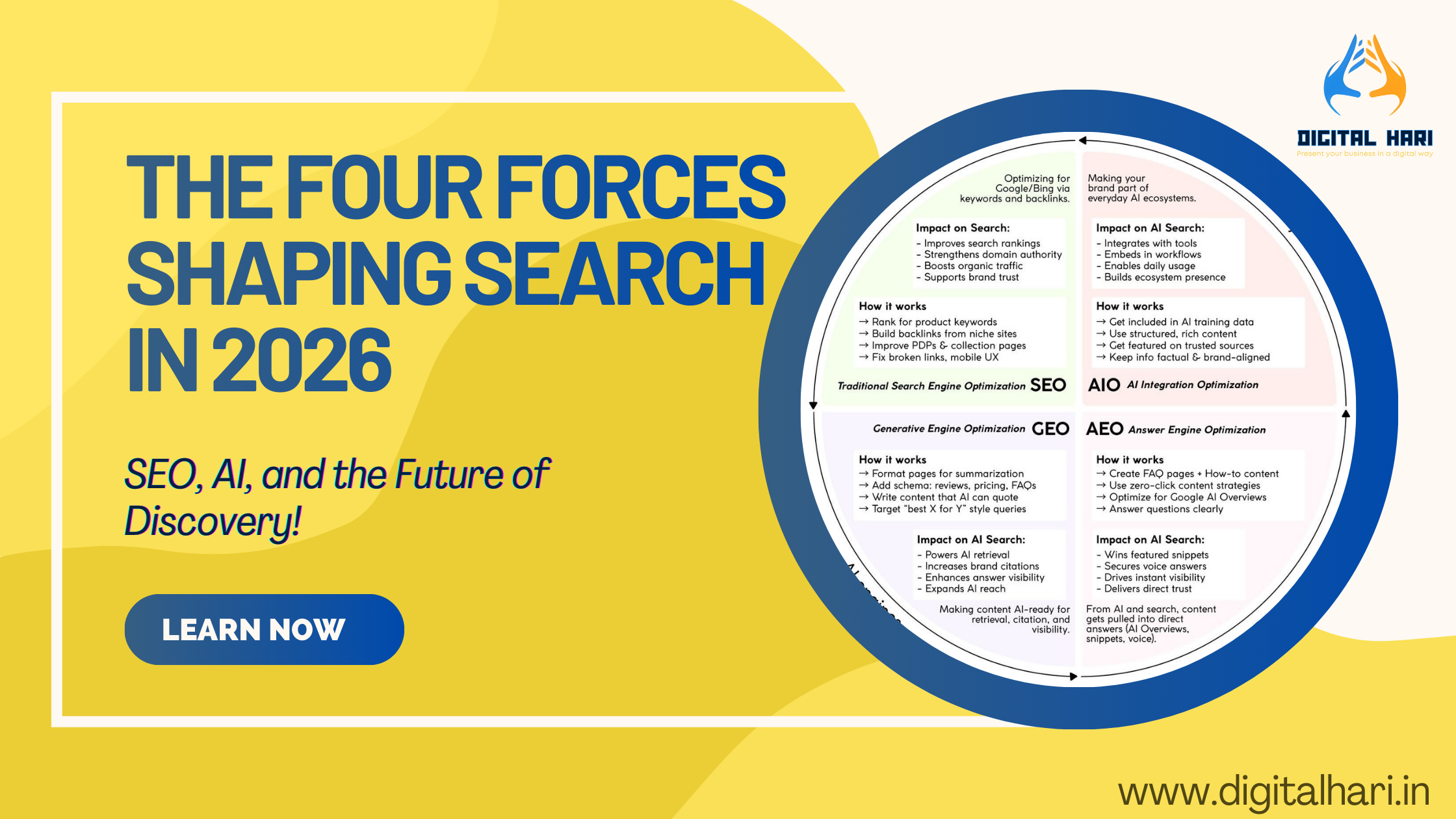
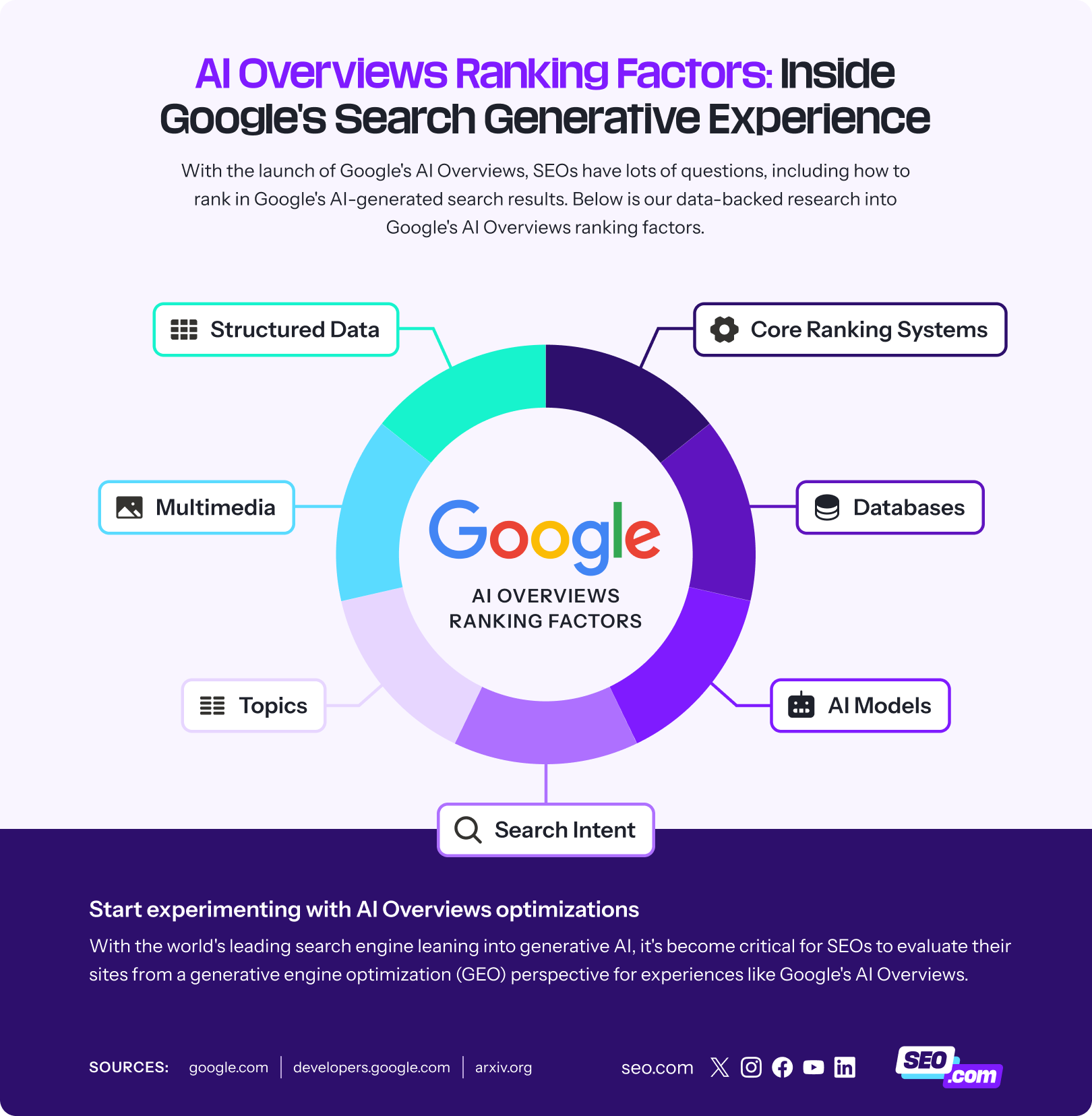

🔑 Target Keywords (Primary & Secondary)
Primary
-
SEO tools 2026
-
why SEO tools fail
-
future of SEO tools
-
AI SEO tools
Secondary
-
search intent SEO
-
tool-first SEO
-
Google AI Search optimization
-
SEO for AI overviews
-
behavioral SEO signals
-
modern SEO strategy 2026
Introduction: The SEO Tools Crisis No One Talks About
In 2026, the SEO industry is facing a silent collapse.
Despite using dozens of platforms, most websites fail to rank, convert, or appear in Google AI results.
The problem isn’t SEO.
The problem is that 90% of SEO tools are built for an outdated search engine.
Google today is powered by:
-
AI Overviews
-
Intent detection
-
Behavioral signals
-
UX evaluation
Yet most tools still measure:
-
Keyword density
-
Arbitrary SEO scores
-
Outdated ranking signals
This article explains why SEO tools fail in 2026, and what actually works now.
1. SEO Tools Are Still Keyword-Centric (Google Is Not)
Most traditional SEO tools are built around one assumption:
If you optimize keywords, rankings will follow.
In 2026, this assumption is false.
Why keyword-based SEO fails:
-
Google understands intent, not just terms
-
AI summaries extract answers, not pages
-
Repetitive keyword usage reduces clarity
Instead of keyword stuffing, modern SEO requires:
-
Intent matching
-
Semantic clarity
-
Clean content structure
👉 This is where tools like SEOcraft Content Analyzer outperform classic keyword tools by focusing on intent fulfillment, not repetition.
2. SEO Scores Are Vanity Metrics
SEO tools love scores:
-
SEO score
-
Optimization level
-
Content grade
But Google does not use these metrics.
What Google actually evaluates:
-
Time on page
-
Scroll depth
-
Interaction patterns
-
User satisfaction signals
-
Return-to-search behavior
A page with high engagement will outrank a “perfectly optimized” page every time.
That’s why behavioral SEO signals are now more important than technical scores.
3. Generic SEO Audits Are Actively Harmful
Most SEO audits fail because they treat every page the same.
But in reality:
-
Tool pages ≠ blog posts
-
Calculators ≠ long-form articles
-
Generators ≠ content hubs
Generic audits flag:
-
“Low word count”
-
“Missing keywords”
-
“Short meta description”
These recommendations often damage conversion and UX.
👉 Modern audits must be page-type aware.
SEOcraft tools are designed with this philosophy:
-
Tool pages optimized for instant value
-
Minimal friction
-
Clear explanations without bloat
4. Tool-First SEO: The Winning Model in 2026
Tool-first SEO means:
-
The solution comes first
-
The explanation comes second
-
The content supports the action
Why Google prefers tool-first pages:
-
Immediate problem solving
-
Natural engagement
-
Lower bounce rates
-
Clear user satisfaction
Examples inside SEOcraft:
-
Meta Tag Generator → solves instantly
-
Redirect Chain Checker → actionable output
-
AdSense Calculator → intent-aligned value
This structure is AI-friendly and user-first.
5. Search Intent > Keywords (The New SEO Formula)
Instead of asking:
❌ “What keyword should I rank for?”
Ask:
✅ “What problem is the user trying to solve right now?”
Modern SEO tools must identify:
-
Informational intent
-
Transactional intent
-
Diagnostic intent
-
Action-based intent
Pages aligned with intent:
-
Rank faster
-
Perform better in AI Overviews
-
Convert more naturally
6. SEO for Google AI Overviews (SGE Reality)
Google AI Overviews don’t care about:
-
Keyword density
-
Long introductions
-
Filler paragraphs
They extract:
-
Clear answers
-
Structured explanations
-
Direct solutions
To appear in AI Search:
-
Use clean headings
-
Provide direct explanations
-
Add structured data
-
Avoid content noise
This is why Schema + clarity are mandatory in 2026 SEO.
7. What SEO Tools Must Do to Survive in 2026
Modern SEO tools must:
-
Be intent-aware
-
Be page-type specific
-
Optimize for behavior, not scores
-
Support AI-readable structure
-
Deliver real value instantly
SEOcraft is built on this exact foundation.
Conclusion: SEO Isn’t Dead — Bad Tools Are
SEO in 2026 is not about more data.
It’s about better decisions.
If your SEO tool:
-
Focuses on keywords only
-
Shows fake scores
-
Ignores user behavior
-
Treats every page the same
Then it’s already obsolete.
The future belongs to:
-
Tool-first SEO
-
Intent-driven optimization
-
AI-ready content structures
And that future is already here.